Introduction
This year, for EDCI 487, or as it’s more commonly known, Applied Design Skills and Technology (ADST), we completed a series of mini design challenges. These challenges enhanced core concepts and also aligned with readings throughout the course. The following project document highlights from the course and the learning that took place. This page documents that learning by showing evidence from class (photos) and connecting it to course concepts. A classmate and I (Carter White) have also chosen to interview each other about the course so that we can reflect and talk about some of the moments we felt we demonstrated a growth mindset, as well as some Ah-ha moments from the course, as well as a big idea that we will take with us into our teaching careers, which we learned from our experience in the makerspace as designers. You can find that recording below.
Audio Recording
Frog building
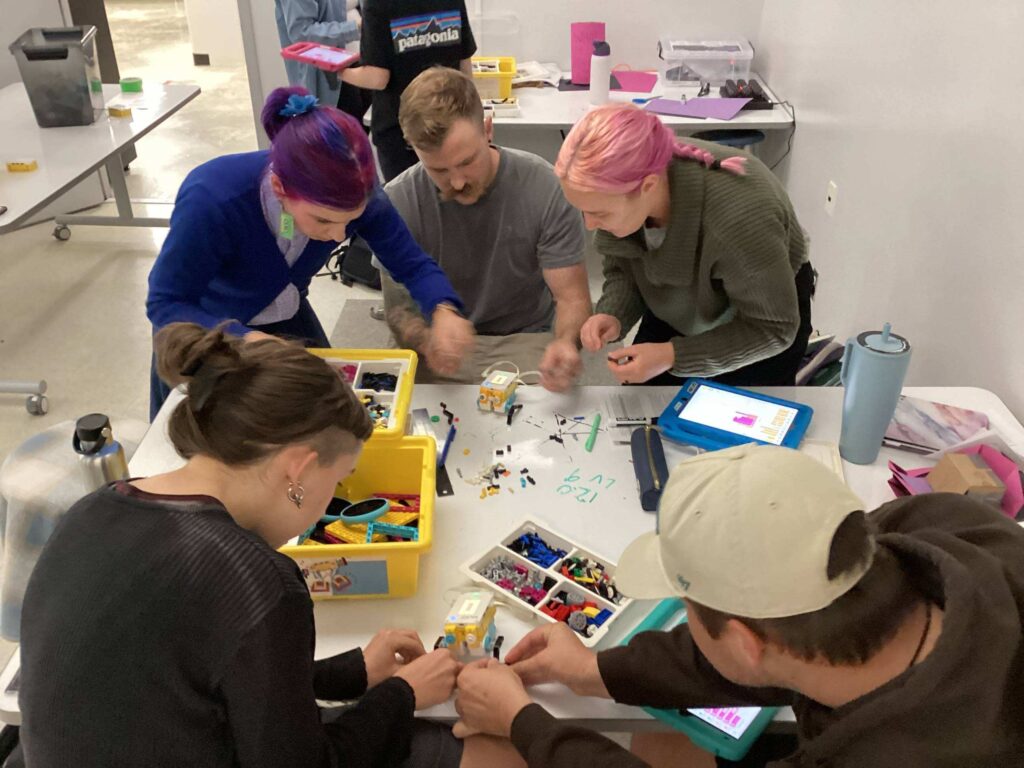
In this project, we worked in teams to create a frog that could move from one side of the room to the other. This project highlighted social constructivism. The instructor gave very few instructions during the session, and we had to figure out how to make the frogs move on our own. One way we did this was by observing (spying) on our peers. Learning took big leaps when one group discovered something, and that knowledge then spread through the class until another group made another discovery. It was an insightful look into group learning consciousness.
Earthquake Simulation
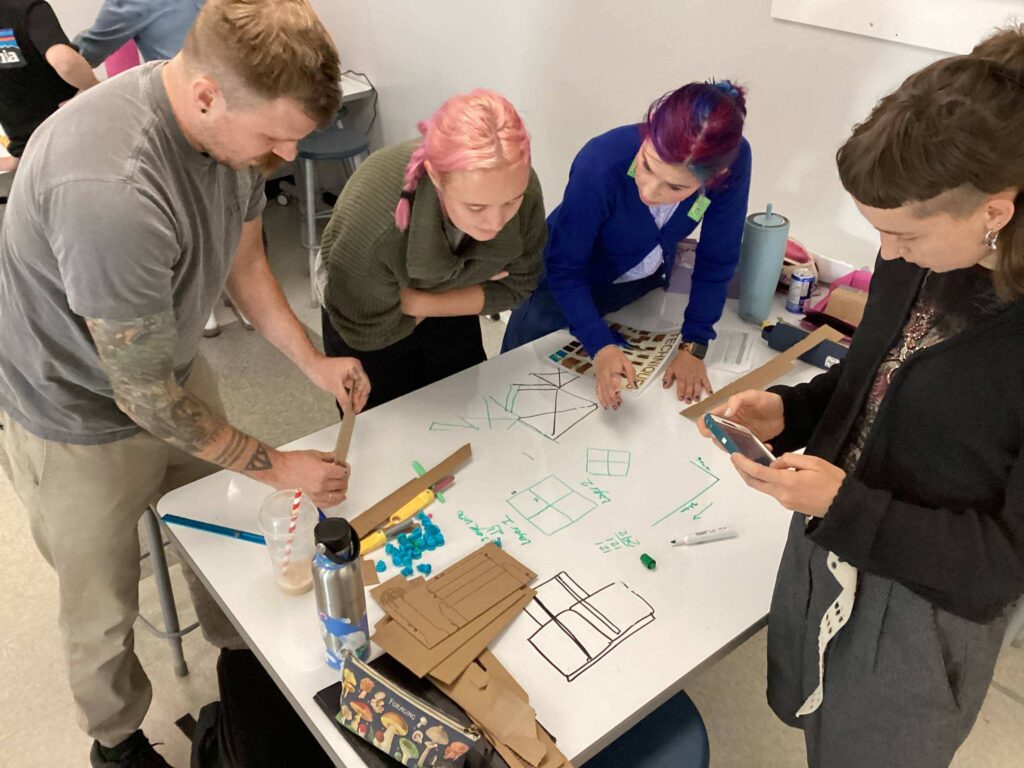
For this design challenge, we built a cardboard model as tall as we could that would withstand an earthquake simulation machine built from LEGO. This project really highlighted the principles of design: build something, test it, make it better. Our design went through many iterations before we even began construction. We also kept working on it after testing it multiple times. I also connected this learning to a growth mindset.
EDIDA
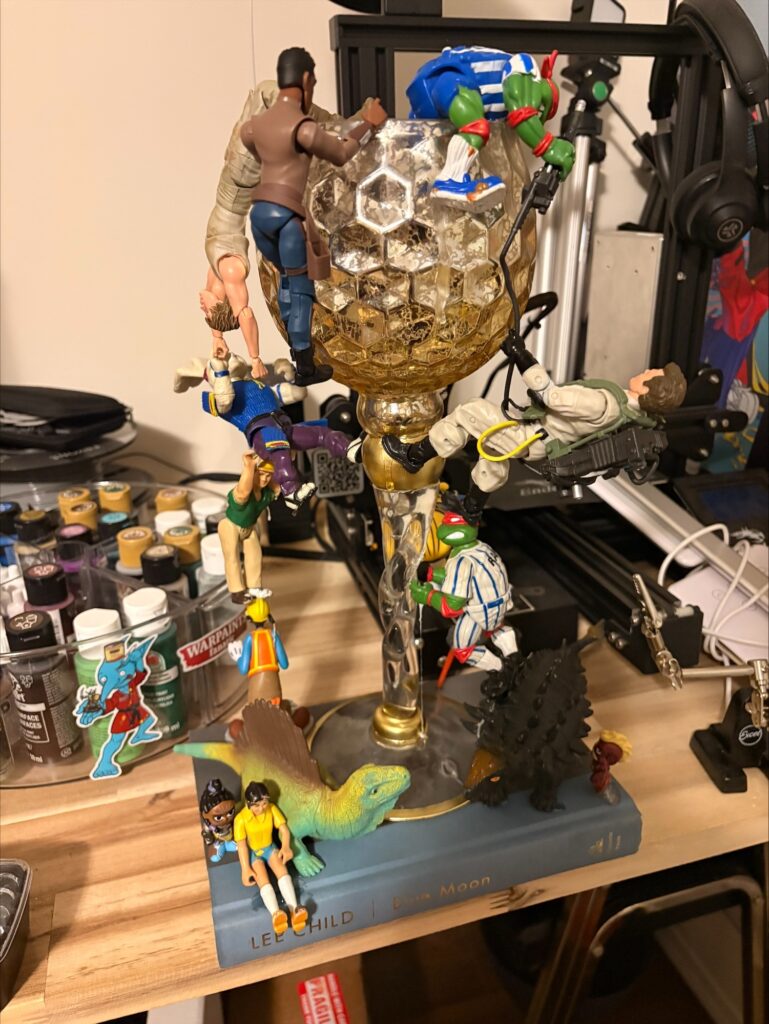
This challenge was to create an artefact we could bring into the classroom in the future to remind us of equity, diversity, inclusion, decolonisation, and anti-racism. I chose to make a model out of children’s toys showing the different paths to education. I will use this artefact in my practicum class as the students’ GEM jar. They receive gems for things like being kind, inclusive, and working well together.
YXC Makerspace
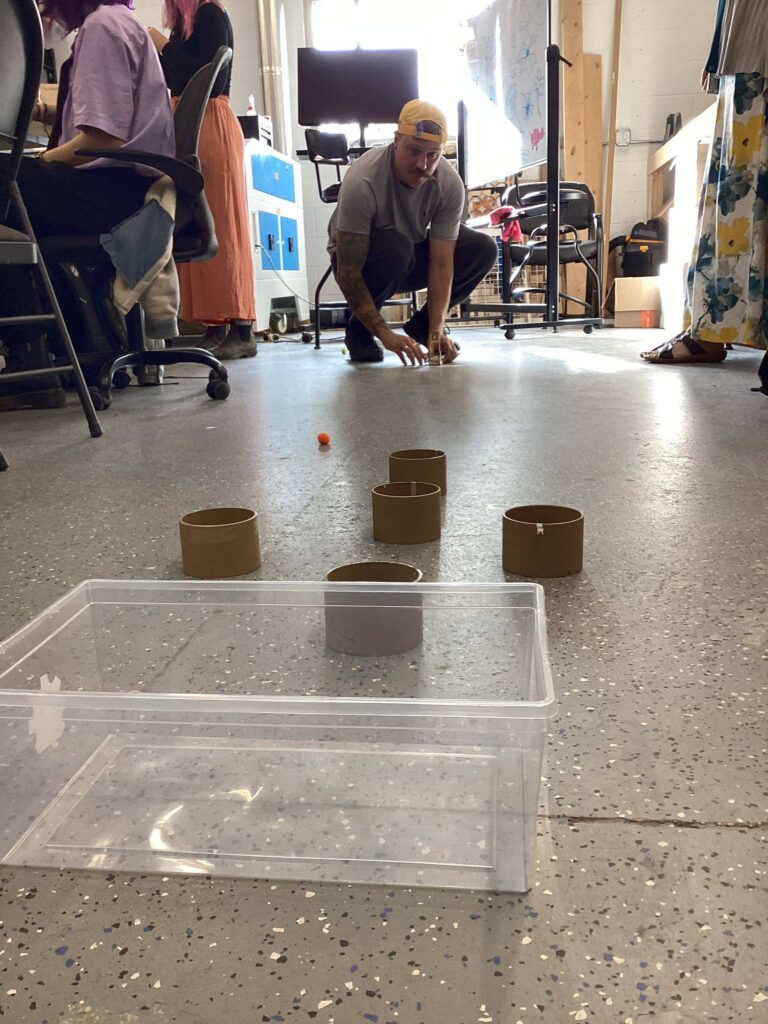
This photo was taken at the YXC makerspace in Cranbrook. This session let us explore a local space open to the public. We built miniature catapults and tested them. This experience connected with the course teachings about the importance of makerspaces for all ages and how the maker movement is becoming more prominent and accessible in communities.