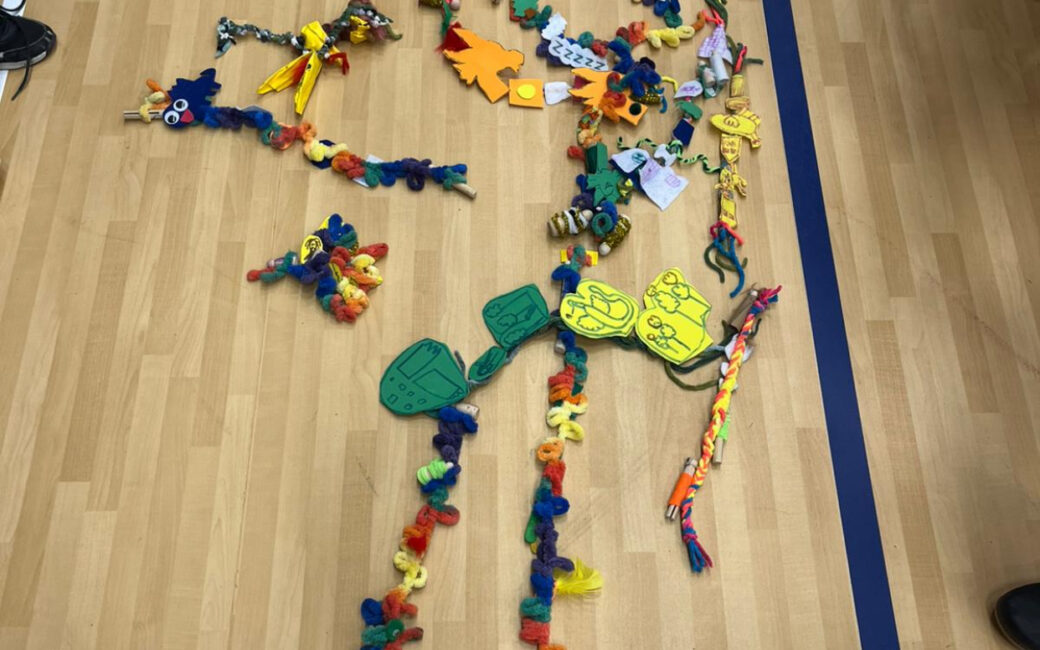
Story vines are a unique way for students to have a tactile way to help with reading comprehension and retelling storyies. This week in class, we hosted a group of grade twos and threes from a local school at Huckletberry Books for a reading of the book “The Paper Bag Princess” by Robert Munsch. This book is beloved by students and teachers alike and provides an opportunity for us to connect with students over a shared reading. After reading the text, we broke into groups and created story vines together. But what is a story vine? And how is it created? Story vines are an activity that is highlighted in our class text, “Sometimes Reading Is Hard” by Robyn Bright. “Story vines are based on an old African tradition of
storytelling and can be used to develop language and support reading and writing across the curriculum.” (Bright, 92) A story vine is made by braiding yarn into a length of about two feet, mapping the story by creating characters and parts of the story with crafts and connecting them to the yarn from top to bottom. This allows students to understand the key elements to plot and the important characters in the book. Furthermore, it allows them to make deeper connections with the material and have some small reminders for when they retell the story in their own words.
The Finished Product
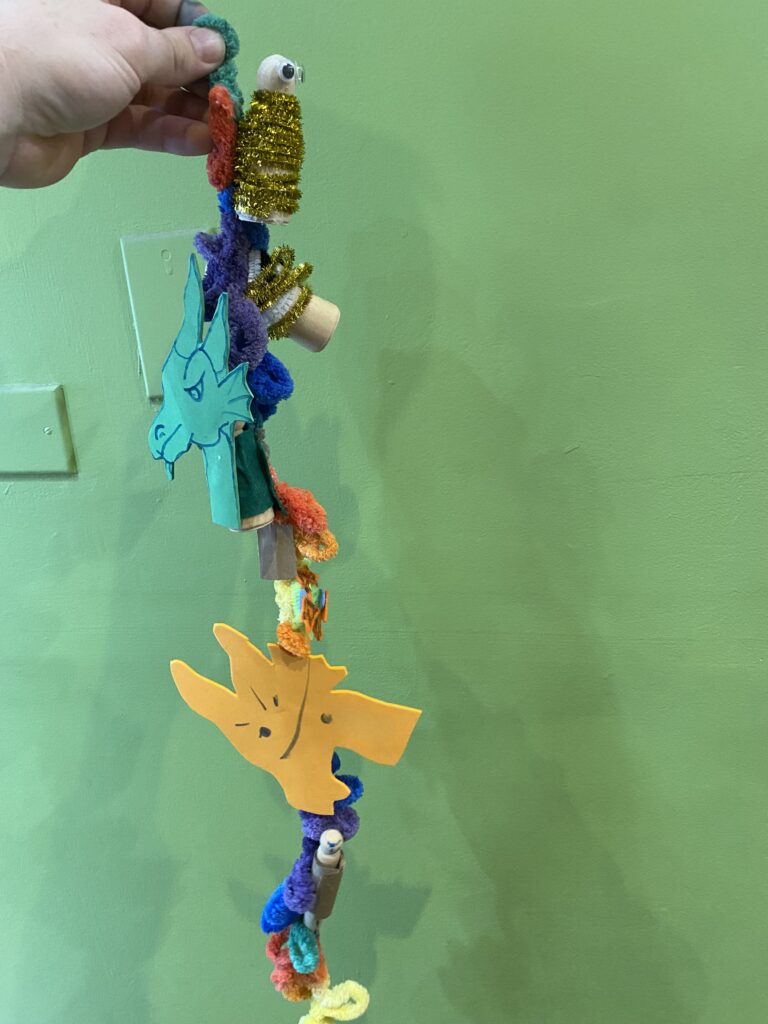
This is an example of a story vine created by a student in my group. At the top, it features Elizabeth and Ronald, then the fearsome dragon, a world on fire as the dragon flies around it burning forests, then a sleeping dragon, and finally Elizabeth happily on her own in her paper bag! The following day, we went into one of the schools to observe the creators of the Story Vine retelling “The Paper Bag Princess” to a kindergarten class. I think the vines helped the students to connect with the story, and their variations were interesting; however, our group really nailed it and hosted a rich retelling for their kindergarten buddies.
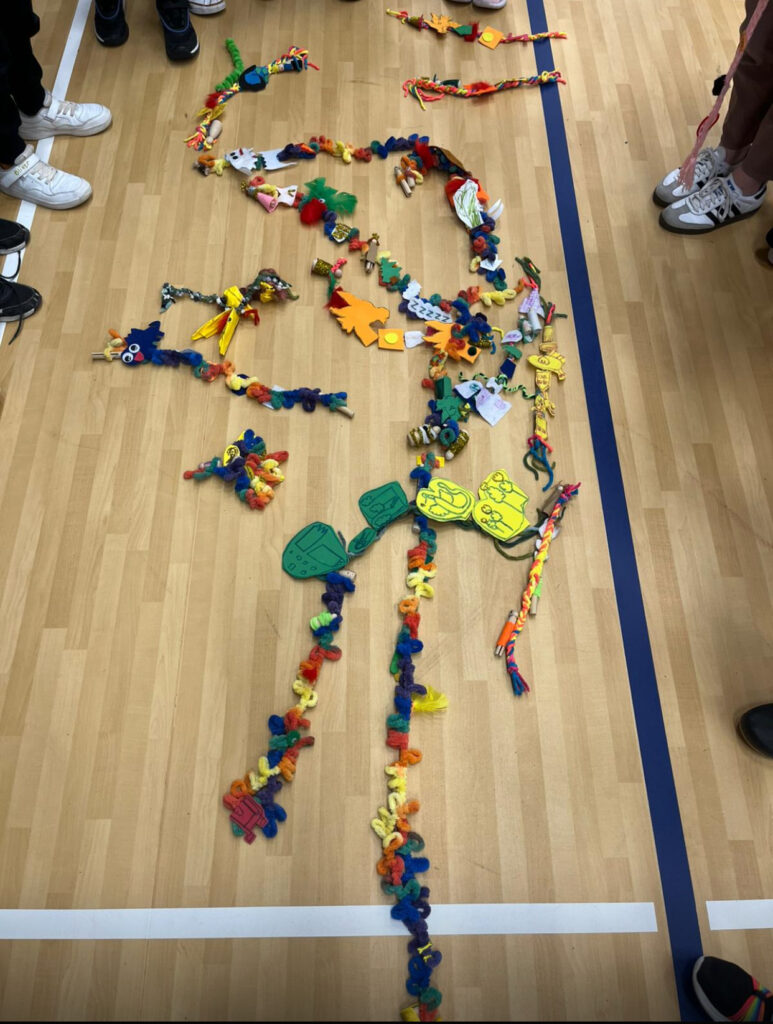
Story vines that were completed by the whole class.
Conclusion
The project was a success, and each story vine was unique to the student who created it. Having physical objects that the students created really seemed to help with retelling the story. Furthermore, it was more engaging for the kindergarteners and easy to follow along with visual cues. This project could very easily be scaled up to higher grades, perhaps in biology to show life cycles, or for students to create vines that share stories of who they are and add to them throughout the year! There is also the opportunity to weave in FPPL, including connections to oral storytelling as suggested by a CBC article written on story vines in 2019: ” While they don’t actually have their roots in Indigenous history, McGurry says they fit in well with oral traditions.” (Vidal, 2019). This is a project I enjoyed and will likely incorporate into my own teaching practice.