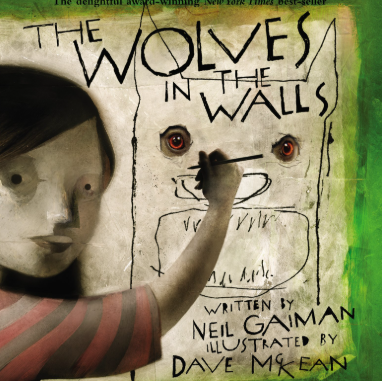
During class, we learned about a VR experience that immerses the user in the book “The Wolves in the Walls” (link here to the experience). Our objective was to teach a literacy lesson to students in a classroom, read the book to them, and then facilitate their use of the VR so they could experience the book in first person. However, before we embarked on this journey, we needed to complete the experience ourselves. In the design lab, I put on my VR goggles and stepped into the experience. Setting the boundary on the device so I didn’t walk into anything, and beginning the story. The animation style was incredible and featured work from the makers of the movie “Coraline” (an incredible stop-motion feature film). I was blown away by how far VR has come and thought the experience was beautifully designed, with several interactive elements, including canning jam being stolen by wolves, a simulation arcade-style game where you fight wolves, and a lively wolf dance party. I was excited to take students through this experience.
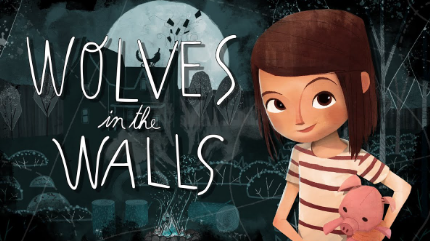
Insitu
In the school, we read the story and laid out the headsets in preparation. The students took turns and began to immerse themselves in the book. They loved it; many students asked to try the experience again, laughing and trying to talk to the characters. I’ll admit it felt almost dystopian working in a classroom and facilitating half the students in VR, experiencing another world, while the rest watched and completed workbooks. There was a disconnection there that felt very real. Is this the future of education? slipping away to experience a book in first person. The death of imagination? Or was it simply a way to enhance learning outcomes and create more authentic learning experiences? Only time will tell.
ELA Curriculum
This experience fits the following Big Ideas for the BC ELA curriculum
Language and text can be a source of creativity and joy. – The students enjoyed both formats of the story, and I think the VR experience enhanced the students’ view of reading and the Idea that a book can be like a movie in one’s mind.
Texts can be understood from different perspectives. – While the students engaged with the book from the perspective of the protagonist, they then engaged with the VR experience from the perspective of a friend of the protagonist who was along for the ride. This experience would shift students’ perception of the story and their connection to the character.
Next, some connections to the BC ELA curriculum competencies
Identify how differences in context, perspectives, and voice influence meaning in texts – similar to our big Idea, the contextual experiences in the story, as well as the VR experience, would change the meaning and tone of the story slightly as experienced by the reader.
Access information and ideas from a variety of sources and from prior knowledge to build understanding – students used prior knowledge of VR as well as of the story to better interact with the experience. Furthermore, students used ideas from two separate sources and perspectives on the same story to build a more complete picture.
Reflection
Overall, the experience was positive, and I would love to bring VR into a classroom. I think for my reading unit on literary elements, I’ll see if Ryan can come in, and we can incorporate “The Wolves in the Walls.” I am interested to see what the future holds for education and the use of VR experiences to enhance learning. Perhaps we are closer than we think to students fully engaging with the curriculum in completely immersive experiences.