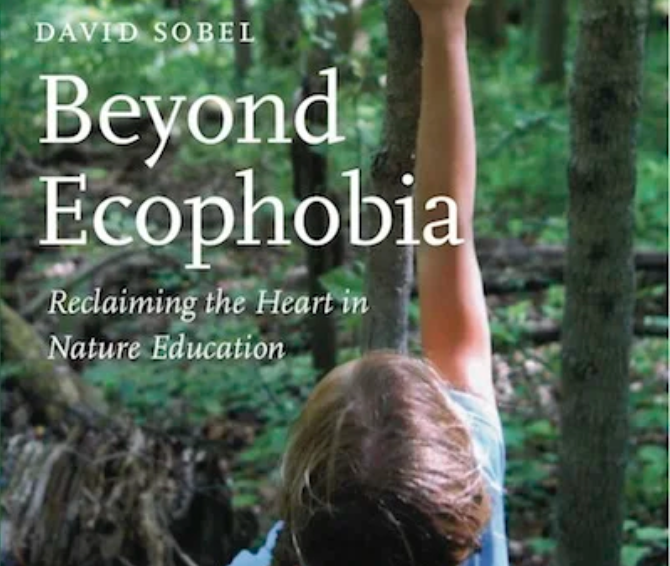
During class time, we examined the article “Beyond Ecophobia” by David Sobel. Sobel argues in this article that education introduces students to the global climate and ecological crises too early, creating anxiety rather than empowerment (Sobel, 1996). This Idea of climate anxiety is becoming increasingly prevalent as the climate crisis and carbon emissions dominate the news of late. In fact, a 2021 global study published in The Lancet Planetary Health, which surveyed 10,000 young people across 10 countries, found that 59% were very or extremely worried about climate change, and 49% reported that climate anxiety negatively affected daily functioning (Hickman et al. 2026). But what does this mean? Teaching about the environment and local plants and animals is one of the cornerstones of the B.C. science curriculum. Do we throw that away in fear of negatively impacting our students? No, in fact, it’s the opposite. Sobel goes on to say that research on environmentalists shows that commitment to the environment often stemmed from two things: extensive time outdoors as a child and relationships with adults who modelled respect and love for nature (Sobel, 1996).
Sobel says that child development should be divided into three distinct categories when learning about the environment.
Early years (Primary) – nurture wonder about the world around us
Middle Years (Intermediate) – Cultivate exploration
Adolescence (high school) – Support informed action
The B.C. curriculum actually supports these benchmarks, as elementary grades focus on “wonders” and learning about local plants and animals. These lessons can be bolstered by spending time outside and answering all those questions students have. Furthermore, the big ideas in grades 4-6 cover interconnected systems and adaptations for survival. These ideas, combined with the rich culture and stewardship principles of the Ktunaxa peoples and First Peoples’ principles for learning, provide fertile ground for growing the world’s next crop of environmental enthusiasts.
On a more personal note. A good friend of mine, Ryan, spent summers with his father at their cabin by the lake. These trips often involved days on the beach and many hours of fishing. Because Ryan had a connection to the land and understood the importance of ecosystems and water health, he was driven to become a biologist to protect the spaces he loved as a child so others could enjoy them. Science sometimes overlooks this emotional connection. It can be viewed as people in white coats analysing everything in our world through data points and studies. Science could, at times, be viewed as concerned citizens who connect with memories and preserve spaces through love for their childhood selves. So, before you create those dioramas on the destruction of the rainforest, ask yourself. Will this connect my students to where they live? Put down the art supplies, go outside, and take on a small project in your community where your students can see the places they love thrive.
Sobel, D. (1996). Beyond ecophobia. Yes! A Journal of Positive Futures, (6), 14–17.